
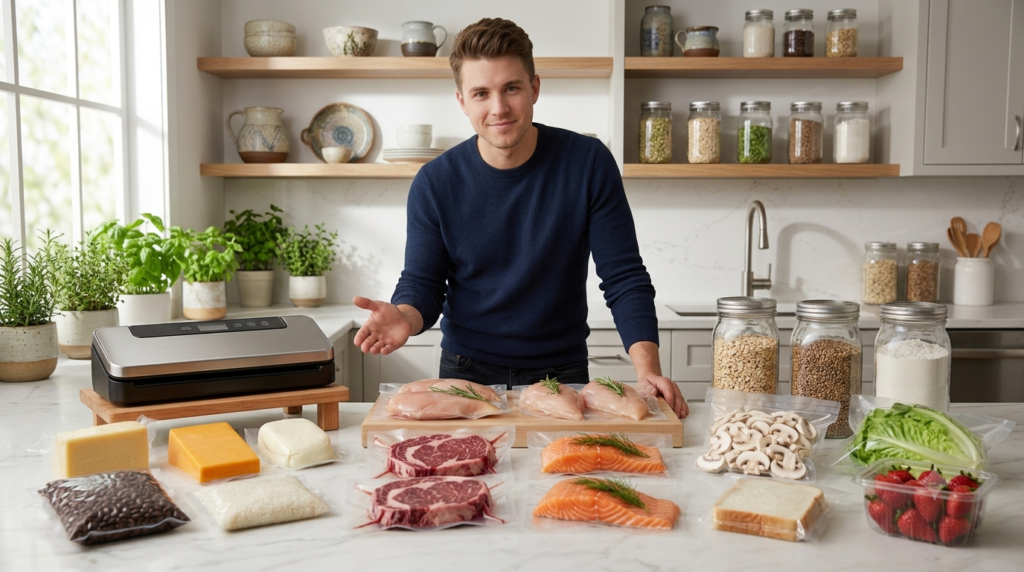
If you just bought a vacuum sealer, or you’re trying to decide whether to buy one, the first question is always the same: what can you actually put in it?
The short answer is that you can vacuum seal most food. Meat, poultry, fish, cheese, dry goods, and a long list of fruits and vegetables all seal well. A smaller list of foods needs extra prep first, and a few foods shouldn’t go in a vacuum sealer at all, for reasons that come down to basic food safety rather than personal preference.
This guide walks through every major food category, flags the exceptions, and links out to more detailed articles on storage times and technique for each one.
Foods You Can Vacuum Seal?

You can vacuum seal most meats, poultry, fish, cheese, dry goods like rice and coffee, and many fruits and vegetables. A few foods need extra care first: raw garlic and mushrooms can develop harmful bacteria in an oxygen-free environment, soft cheese and fresh bread can get crushed, and cruciferous vegetables like broccoli need blanching to prevent gas buildup inside the bag.
At a glance, here’s what falls into each group:
- Safe to seal as-is: raw and cooked meat, poultry, fish, hard cheese, rice, flour, coffee, nuts, pasta
- Safe with a freeze-first step: soups, sauces, marinades, and other liquids
- Needs prep before sealing: raw garlic, mushrooms, cruciferous vegetables, soft fruit
- Should not be vacuum sealed raw: garlic and mushrooms without blanching or freezing, due to botulism risk
Food Category Comparison Table
Use this table as a fast reference. It’s not a substitute for the food-specific guides linked throughout this article, but it will tell you in seconds whether something is safe to seal, whether it needs prep, and roughly how much longer it will last once sealed.
| Food Category | Vacuum Seal Safe? | Prep Needed First? | Typical Freezer Life (Sealed) | Typical Freezer Life (Unsealed) |
|---|---|---|---|---|
| Raw meat (beef, pork) | Yes | None | 1–3 years | 4–12 months |
| Raw poultry | Yes | None | 1–2 years | 9–12 months |
| Fish & seafood | Yes | None | 1–2 years | 3–6 months |
| Cooked meat & leftovers | Yes | Cool fully first | 1–2 years | 2–3 months |
| Hard cheese | Yes | None | 6–8 months (fridge) | 2–4 months (fridge) |
| Soft cheese | Caution | Freeze first | 1–2 months (frozen) | Not recommended |
| Rice, flour, coffee | Yes | None | 1–2 years | 6–12 months |
| Fruits (firm) | Yes | Wash and dry | 1 year+ | 6–12 months |
| Berries & soft fruit | Caution | Freeze first (flash-freeze) | 6–12 months | 3–6 months |
| Cruciferous vegetables | Caution | Blanch first | 1 year+ | 8–12 months |
| Raw garlic | Not recommended | Roast, ferment, or freeze | N/A raw | N/A raw |
| Raw mushrooms | Not recommended | Sauté or blanch first | N/A raw | N/A raw |
| Soups & liquids | Yes | Freeze first, then seal | 1–2 years | 4–6 months |
| Fresh bread | Caution | Freeze first | 3–6 months | 1–3 months |

Storage times vary by freezer temperature and how the food was handled before sealing. For exact numbers by food, see the dedicated storage-duration articles linked throughout this piece.
Meats & Poultry
Meat is where most people start with a vacuum sealer, and for good reason. It’s the category with the biggest gap between sealed and unsealed shelf life.
Raw Meat & Poultry
Raw beef, pork, lamb, and poultry all seal well. Pat the meat dry before sealing — excess surface moisture can get pulled into the sealer and weaken the seal. Portion meat into meal-sized amounts before sealing rather than freezing one large block. A pound of ground beef split into four quarter-pound packs thaws faster and wastes less than one four-pound brick.
This matters more than it sounds like it should. A large sealed block of meat takes hours longer to thaw than a thin, flat pack, and once you’ve cut into a big block to use part of it, the rest is exposed to air again. Smaller, flatter packages also freeze faster, which limits ice crystal formation and keeps the texture closer to fresh once thawed.
For exact timelines by protein, see the guides on how long vacuum sealed meat lasts and how long vacuum sealed chicken lasts.
Cooked Meat & Leftovers
Cooked meat and leftovers seal just as well as raw meat, with one rule: let the food cool to room temperature first. Sealing hot food traps steam, which creates condensation inside the bag and can affect both the seal and the texture of the food.
Bacon, Steak, Jerky & Other Cured/Smoked Meats
Cured and smoked meats like bacon, jerky, and deli meat seal well and benefit the most from vacuum sealing because they’re often bought in bulk and used slowly. Jerky in particular keeps its texture far better sealed than in a standard bag, since it’s not exposed to air that would make it go stale.
See the guide on other vacuum sealed meats for bacon, steak, ribs, and jerky specifically.
Fish & Seafood
Salmon & Other Fresh Fish
Fresh fish is one of the best arguments for owning a vacuum sealer. Fish spoils faster than red meat, and vacuum sealing slows that process significantly by removing the oxygen that speeds up both bacterial growth and freezer burn.
Seal fish as soon as possible after purchase, and pat it dry first. Wet fish is one of the more common causes of a failed seal.
Full technique notes live in the how-to-vacuum-seal-fish guide, and storage timelines in the fish and salmon storage article.
Shellfish & Frozen Seafood
Shellfish, shrimp, and frozen seafood all seal well. If you’re sealing something that’s already frozen, let it firm up completely first — sealing partially thawed shellfish can push liquid into the sealer.
Fruits & Vegetables
Produce is the category with the most nuance, because a few common items carry real safety risks when sealed raw.
Best Produce for Vacuum Sealing
Firm fruits and vegetables — apples, carrots, peppers, green beans, corn — seal well with basic prep: wash, dry thoroughly, and cut into the size you’ll actually use. Cutting produce to the portion size you’ll cook with later saves a step down the line, since there’s no good way to divide a sealed bag once it’s closed.
Full breakdown by produce type is in the fruits and vegetables guide.
Produce That Needs Special Prep — Mushrooms, Potatoes, Tomatoes
Mushrooms need to be sautéed or blanched first, not sealed raw (more on why in the safety section below). Potatoes can be sealed raw for short-term storage, but for freezing they hold up better blanched first. Tomatoes are high in moisture and tend to crush under vacuum pressure unless they’re diced and partially frozen first.
Each of these gets its own dedicated article with step-by-step prep instructions.
Garlic, Onions & Alliums
Garlic is one of the two foods on this list with a genuine safety flag, not just a texture concern. Raw garlic sealed in an oxygen-free environment can support the growth of Clostridium botulinum, the bacteria responsible for botulism. Onions are lower risk but still do better roasted, caramelized, or frozen before sealing. See the safety section below for details.
Berries & Soft Fruit — Strawberries
Strawberries and other soft berries can be vacuum sealed, but only after a flash-freeze on a tray for a couple of hours. Sealing them fresh crushes them under vacuum pressure. Once frozen solid, they seal and store well for months.
Dairy & Cheese
Hard Cheese vs. Soft Cheese
Hard and semi-hard cheeses — cheddar, parmesan, gouda — are excellent candidates for vacuum sealing. They stay fresh far longer in the fridge sealed than wrapped in plastic, since vacuum sealing slows both mold growth and moisture loss.
Soft cheeses (brie, ricotta, fresh mozzarella) are trickier. Sealing them raw can press moisture out and change the texture, and soft cheese is more susceptible to bacterial growth in an anaerobic environment than firm cheese. If you want to seal soft cheese, freeze it first.
Dry Goods & Pantry Staples
Rice, Coffee, Flour & Quinoa
Dry goods are the lowest-risk, highest-reward category. Rice, flour, coffee, quinoa, oats, and pasta all seal easily and keep for a year or more when stored in a cool, dark place. Vacuum sealing also protects dry goods from pantry pests, since it removes the air insects need and makes the package harder to get into in the first place.
See the full breakdown in the dry goods storage guide.
Liquids & Soups
Broths, Soups & Marinades (Freeze-First Technique)
Liquids can be vacuum sealed, but not straight into a standard sealer — most machines will pull liquid into the pump and damage it. The workaround is simple: freeze the liquid solid in a container or bag first, then vacuum seal the frozen block. Some sealers also include a liquid-specific setting that slows the process to reduce this risk.
Full step-by-step instructions are in the guide to vacuum sealing liquids and soup.
Foods You Should NOT Vacuum Seal (or Need to Prep First)
This is the section worth reading carefully, because it’s about safety, not just food quality.
Raw Garlic & Mushrooms — Botulism Risk
Clostridium botulinum, the bacteria that causes botulism, thrives in low-oxygen environments — exactly the environment a vacuum sealer creates. Raw garlic and raw mushrooms are two of the foods most commonly flagged by food safety agencies for this reason. Sealed raw and left at room temperature or even in the fridge for too long, they can support bacterial growth without any visible sign of spoilage.
The fix isn’t complicated: roast, sauté, blanch, or freeze garlic and mushrooms before sealing them. Sealing them frozen or fully cooked removes the risk.
Cruciferous Vegetables (Broccoli, Cabbage) — Gas Buildup
Broccoli, cauliflower, cabbage, and other cruciferous vegetables continue to release gas after they’re harvested. Sealed raw, that gas has nowhere to go and can inflate the bag or push the seal open within a day or two. Blanching for two to three minutes before sealing stops this process and also helps the vegetables keep their color and texture in the freezer.
Soft Cheeses & Fresh Bread — Crushing/Mold Risk
Soft cheese and fresh bread share a problem: they’re both delicate enough to be crushed under vacuum pressure, and both hold enough moisture to support mold growth if sealed at room temperature. Freezing first solves both issues — frozen bread and frozen soft cheese hold their shape under vacuum and are far less hospitable to mold.
Common Vacuum Sealing Mistakes To Avoid
Most vacuum sealing problems trace back to one of these five mistakes.
Sealing wet food. Excess surface moisture — on meat, fish, or washed produce — gets pulled into the sealer during the vacuum cycle. This weakens the seal and, over time, can damage the machine’s pump. Pat food dry before it goes in the bag.
Sealing hot food. Condensation from hot or warm food collects inside the bag as it cools, which can lead to a wet seal that fails in the freezer. Let food come to room temperature first.
Overfilling the bag. Leaving too little room near the seal line means food or liquid gets pulled into the sealing strip itself, which prevents a clean seal. Leave at least three inches of empty bag above the food line.
Skipping the freeze-first step for liquids. Trying to seal liquid directly, without freezing it first, is one of the most common reasons a vacuum sealer stops pulling a strong vacuum. Liquid in the pump is not a quick fix — some machines need professional service after this happens.
Sealing raw garlic, mushrooms, or unblanched cruciferous vegetables without a second thought. This one is about food safety rather than machine performance. When in doubt, cook or freeze first.
Most of these mistakes are easy to avoid once you know to look for them, and none require special equipment to fix. A few extra minutes of prep — drying, cooling, or measuring bag space — is usually the difference between a seal that holds for a year and one that fails within a week.
Vacuum Sealing for Mason Jars & Bulk/Long-Term Storage
Vacuum sealing isn’t limited to bags. A jar attachment lets you seal dry goods, leftovers, and even some liquids directly in mason jars, which is a popular option for pantry storage and bulk buys from wholesale stores.
Jar sealing works differently from bag sealing and has its own set of rules for which jars and lids are safe to use. For the full walkthrough, see the Mason Jar Vacuum Sealing Guide. If you’re stocking up on rice, beans, or flour in bulk, the guide to vacuum sealing for bulk and long-term storage covers portioning and rotation strategy as well.
Key Takeaways
- Most food seals well: meat, poultry, fish, hard cheese, dry goods, and most fruits and vegetables are all safe to vacuum seal as-is.
- A few foods need prep first: liquids need to be frozen before sealing, soft fruit needs a flash-freeze, and cruciferous vegetables need blanching.
- Two foods carry a real safety risk raw: garlic and mushrooms can support botulism-causing bacteria when sealed raw. Cook, roast, or freeze them first.
- Dry, cool food seals best. Pat wet food dry and let hot food cool before sealing to avoid a weak or failed seal.
- Vacuum sealing extends shelf life significantly, but it does not replace refrigeration or freezing for foods that already require it.
Frequently Asked Questions
Can you vacuum seal liquids? Yes, but not directly. Freeze the liquid solid first, then vacuum seal the frozen block. Sealing liquid straight from the pot can pull it into the machine’s pump and damage the seal.
Can you vacuum seal raw meat safely? Yes. Raw meat and poultry are some of the best candidates for vacuum sealing. Pat the meat dry first, portion it into meal-sized amounts, and seal as soon as possible after purchase.
What foods should you never vacuum seal? Raw garlic and raw mushrooms shouldn’t be sealed without cooking, roasting, or freezing first, due to botulism risk. Cruciferous vegetables should be blanched first to avoid gas buildup in the bag.
Can you vacuum seal cooked food and leftovers? Yes. Let the food cool to room temperature before sealing to avoid trapping steam, which can weaken the seal and affect texture.
Is vacuum sealing safe for all foods? Nearly all foods, with a short list of exceptions. Raw garlic, raw mushrooms, and unblanched cruciferous vegetables need extra prep before sealing because of how they behave in a low-oxygen environment.
Can you vacuum seal food for long-term (pantry) storage? Yes. Dry goods like rice, flour, and coffee are especially well suited to long-term vacuum-sealed storage, often lasting a year or more in a cool, dark pantry. See the guide to bulk and long-term storage for portioning tips.
Food safety guidance on raw garlic, mushrooms, and low-oxygen storage draws on published guidance from the USDA Food Safety and Inspection Service, the National Center for Home Food Preservation at the University of Georgia, and the FDA. For the full safety rationale behind these recommendations, consult those sources directly.

FreshSealLab publishes research-based guides on vacuum sealing, food storage,
and sous vide, referencing USDA and FDA food safety guidance. Content is
reviewed for accuracy and updated as guidance changes.